As the Program Director at Finkeyz 360, I’ve spoken with countless bright, ambitious students. They can solve complex calculus problems and write brilliant essays, but when I ask them about creating a budget or understanding a student loan, I often see a flicker of uncertainty. This isn’t their fault. For generations, financial education has been the missing subject in our curriculum, a critical life skill left to chance. We prepare students for exams but not for the economic realities of life. The result? Young adults step into the world armed with academic knowledge but are vulnerable to financial stress, debt, and missed opportunities.
Here’s the thing: financial literacy is not just for accountants or business magnates. It’s a fundamental tool for empowerment, enabling every individual to build a life of choice, stability, and purpose. A well-structured personal finance course for students is the bridge between academic achievement and real-world success. It transforms money from a source of anxiety into a tool for achieving dreams—whether that’s studying abroad, launching a startup, or simply living without the constant pressure of financial insecurity. This is about building a foundation for a life of confidence and clarity.
Table of Contents
ToggleThe Unspoken Subject: Why Financial Literacy is a Student’s Superpower
In a world of constant economic shifts, understanding money is no longer optional; it’s a survival skill. Financial literacy is the ability to use knowledge and skills to manage financial resources effectively for a lifetime of financial well-being. It goes far beyond simply saving pocket money. It encompasses budgeting, saving, investing, managing debt, and understanding the financial landscape. For a student, this knowledge is a superpower that unlocks future potential.
Consider the data. According to a comprehensive survey by the National Centre for Financial Education (NCFE), as of 2019, only 27% of the Indian population was financially literate. This gap is particularly concerning among young adults who are on the cusp of making major financial decisions, from taking education loans to starting their first job. Without proper guidance, they navigate this complex world through trial and error, where errors can be costly and have long-lasting consequences.
Let’s look at a practical example. Meet two friends, Priya and Rohan, both 19-year-old college students receiving the same monthly allowance. Rohan, caught up in the excitement of college life, spends his entire allowance on gadgets, outings, and branded clothes. He often runs out of money before the month ends. Priya, however, recently completed a financial literacy program. She uses a simple budgeting app to track her spending, allocating 50% to needs, 30% to wants, and putting aside 20%. She even started a small Systematic Investment Plan (SIP) of ₹500 per month in a mutual fund. By the time they graduate, Rohan is at zero, while Priya has built a small emergency fund and an investment corpus that has already started growing thanks to the power of compounding. This small, early habit has set her on a completely different financial trajectory.
Building Your Financial Toolkit: Core Components of an Effective Course
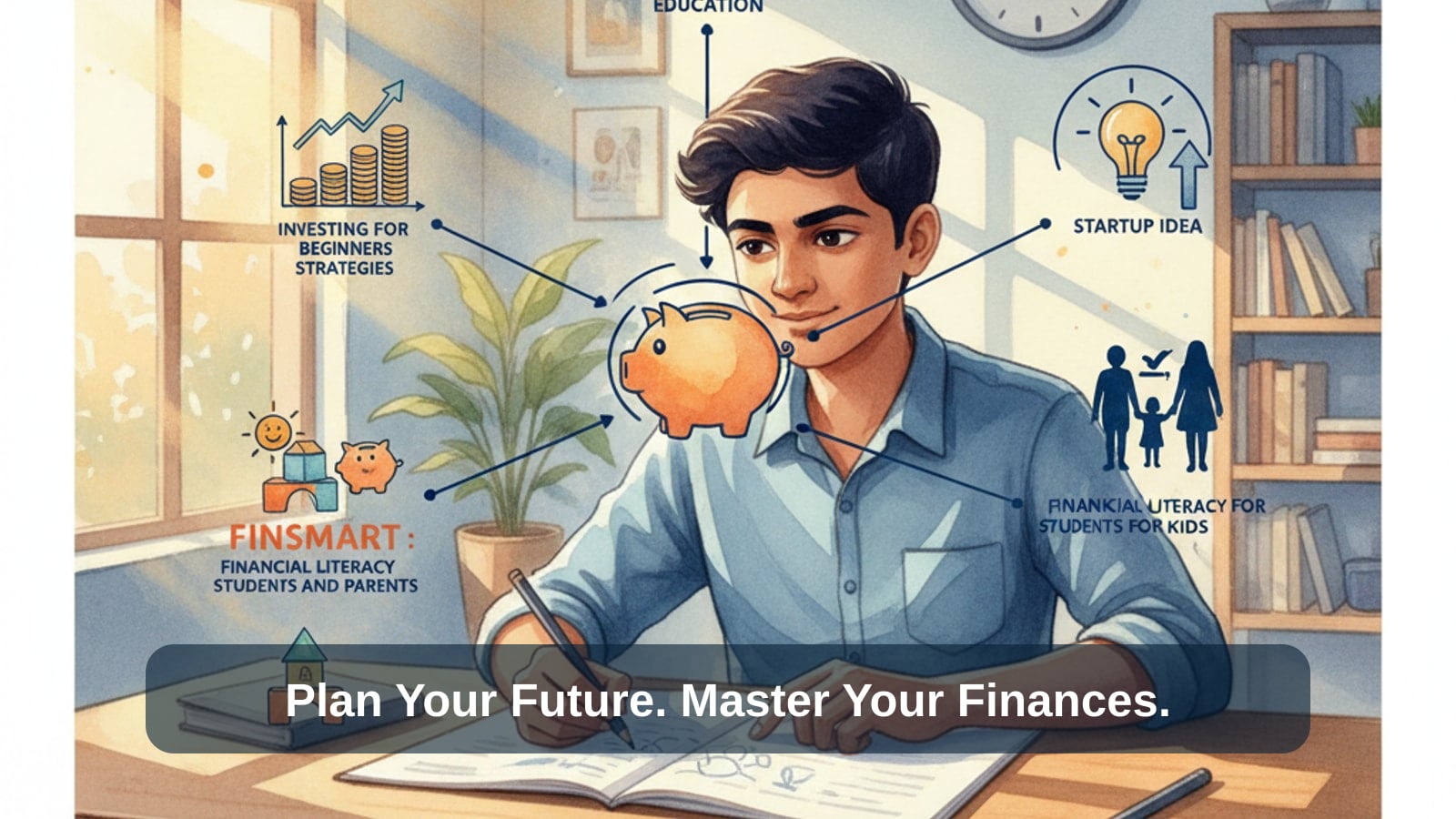
A truly effective personal finance course for students isn’t about complex jargon or stock market wizardry. It’s about building a practical, foundational toolkit. At Finkeyz 360, our FinSmart: Financial literacy for students and parents program is built on these essential pillars, designed by experts from institutions like IIM Ahmedabad and Goldman Sachs to be both comprehensive and accessible.
1. Budgeting and Mindful Spending:
The most common mistake students make is viewing a budget as a restriction. In reality, it’s a plan for freedom. A good course teaches students not just to track expenses, but to understand their spending habits. A practical tip we often share is the 50/30/20 rule, adapted for students. 50% of their income (allowance, part-time job) goes to needs (transport, books, fees), 30% to wants (entertainment, hobbies), and 20% to savings and future goals. This simple framework builds discipline without feeling punitive.
2. Decoding Debt and Smart Borrowing:
Debt can be a powerful tool or a debilitating trap. It’s crucial for students to understand the difference between ‘good debt’ (like an education loan for a top university that increases earning potential) and ‘bad debt’ (like high-interest credit card debt for non-essential purchases). An essential part of any curriculum should cover debt repayment strategies. For instance, explaining the ‘Snowball Method’ (paying off the smallest debts first for psychological wins) versus the ‘Avalanche Method’ (tackling debts with the highest interest rates first to save more money over time) equips students with actionable plans. A common pitfall is ignoring the fine print on loan documents, leading to surprise charges and escalating interest.
3. An Introduction to Investing for Beginners:
Investing often seems intimidating, reserved for experts. But an investing for beginners course can demystify it completely. The key is to start with the concept of making money work for you. We introduce foundational ideas like inflation (why money in a savings account can lose value over time) and the magic of compound interest. Students learn about accessible investment vehicles like Mutual Funds and Systematic Investment Plans (SIPs), which allow them to invest small, regular amounts. The goal isn’t to turn them into day traders but to instill a long-term mindset, showing them how even small, consistent investments can grow into significant wealth over decades. As per SEBI data, the number of young investors in India is rising, highlighting a growing interest that needs to be nurtured with the right education.
Making It Real: From Classroom Knowledge to Lifelong Habits
The most significant challenge in financial education is bridging the gap between theory and practice. Reading about budgeting is one thing; sticking to one is another. This is where experiential learning and holistic development become critical.
Effective programs must be interactive. Think simulations where students manage a virtual portfolio, workshops where they build a real budget for a college trip, or case studies based on real-life financial dilemmas. At Finkeyz 360, our School of Life Skills (Nurture Programs) integrates financial literacy into a broader framework of decision-making, critical thinking, and long-term planning. We believe financial health is deeply connected to overall well-being.
A powerful practical tip for parents is to create a safe space for financial practice at home. Start by giving your child responsibility over a portion of their own expenses, like their mobile phone bill or transportation costs, from their allowance. This creates low-stakes opportunities to make decisions and learn from mistakes. In practice, involving teenagers in discussions about household bills or vacation planning can provide invaluable context, making concepts like trade-offs and saving for a goal tangible.
The ultimate goal of a personal finance course is not just to impart information but to shape behavior. It’s about cultivating habits of mindful spending, consistent saving, and patient investing. It’s about building the confidence to ask the right questions, whether negotiating a salary or choosing a home loan in the future. This is the foundation upon which a secure and fulfilling life is built.
Your Path to Financial Clarity Starts Today
Moving beyond academic grades to embrace holistic development is the cornerstone of preparing a child for the future. Financial literacy is a non-negotiable part of that journey. It’s the language of the real world, and fluency opens doors to opportunities, security, and freedom. Waiting until adulthood to learn these lessons often means learning them the hard way—through debt, stress, and missed chances.
Investing in a personal finance course for your child is one of the most impactful decisions you can make for their future. It equips them with the tools, mindset, and confidence to navigate life’s financial complexities. It’s an education that pays dividends for a lifetime, empowering them to build not just a career, but a life by design. The journey towards financial empowerment is a marathon, not a sprint, and the best time to take the first step is now.
Frequently Asked Questions
What is the best age for a child to start a personal finance course?
The best age to start is as soon as a child begins to understand the concept of money, typically around 7 or 8 years old, with concepts scaling up with age. For young children (ages 7-11), the focus should be on foundational ideas like saving, spending, and the difference between needs and wants. For teenagers (ages 12-17), a more structured course can introduce budgeting, the basics of banking, understanding debt, and the power of compound interest. The key is to make it age-appropriate and engaging.
Are online personal finance courses effective for students in India?
Yes, online courses can be highly effective, especially when they are interactive and tailored to the Indian context. A good online program should offer live sessions with experts, practical case studies relevant to a student in India (like planning for college expenses or understanding local banking products), and engaging activities. For example, a course that simulates investing in the Indian stock market or creating a budget based on living costs in cities like Mumbai or Bangalore provides far more value than a generic, pre-recorded lecture. Look for platforms that offer mentorship and doubt-clearing sessions.
My child finds finance boring. How can I get them interested?
To get a child interested, you must connect finance to their personal goals and passions. Instead of talking about ‘investing’, talk about how saving and investing can help them buy the gaming console they want, fund a trip with friends, or even start their own YouTube channel. Gamification is a powerful tool; use apps that make budgeting a game or challenge them to a ‘savings streak’. Relate financial concepts to their favorite things. For instance,